Bank of America
Welcome to a former nexus of both fashion and music culture in Chapel Hill. For over a decade, this structure housed a prominent restaurant serving high-class steaks and oysters at an affordable price. In the mid-twentieth century, it offered holiday shoppers a place to find Christmas souvenirs and gifts reminiscent of scenes from It’s a Wonderful Life. From the 1940s through the 1980s, British men’s fashion and fine cigars entered Chapel Hill through these doors. At the height of the 1990s music scene, the same space sold Cat’s Cradle concert tickets and stocked the latest vinyl releases. Welcome to 144 East Franklin Street, a building whose history reveals far more than what meets the eye.
The story begins in 1911, when this lot sat open along the east end of Franklin Street. Around that time, the Hill Building would soon rise just next door, a commercial hub that would later house the Carolina Coffee Shop and Julian’s. By 1911, the Royal Cafe, originally a Durham restaurant, expanded its brand into Chapel Hill with a new location on Franklin Street. The cafe extended the Hill Building’s footprint and operated alongside the U.S. Post Office, which occupied much of the structure during this period. The Royal Cafe offered full dinners for 25 cents—about eight dollars in today’s money—and quickly became a favorite among students and townspeople alike.
In the early 1920s, photographer Robert Foister relocated his business to this site after a fire destroyed his previous location across the street. Foister used the upper floor for photography and darkroom work, while the ground floor became a retail and university supply store. For a short period, the University of North Carolina managed a student supply shop here, continuing the site’s role as a campus hub. Both operations left in 1932 to make way for the Alfred E. Williams Company, a gift and card shop that brightened the Depression-era holidays with poinsettias and modest presents for Chapel Hill residents.
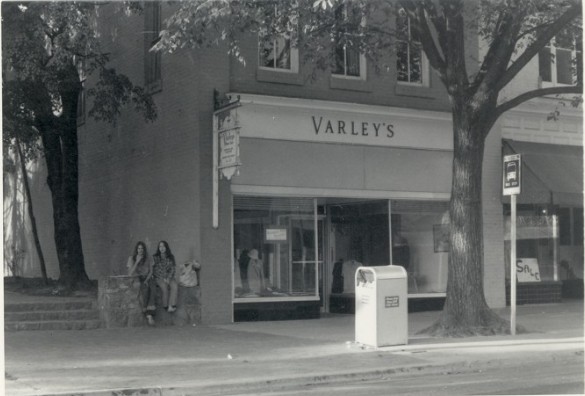
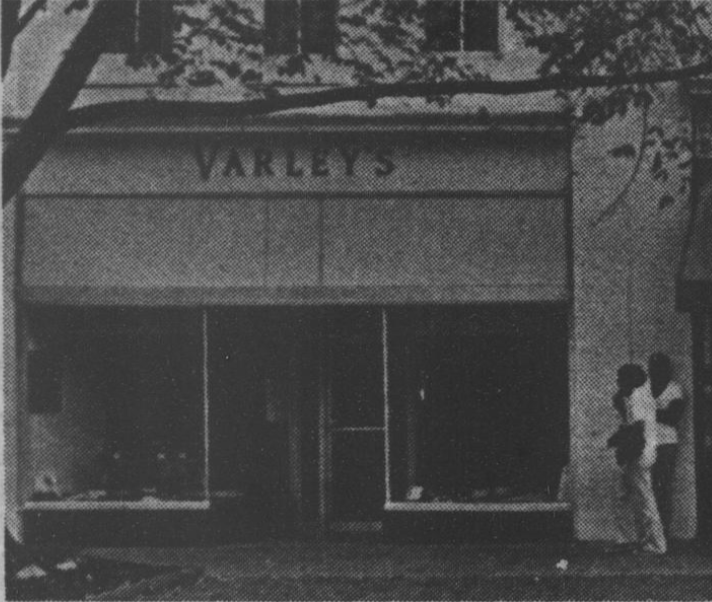
A new chapter began in 1938 when Robert “Bob” Varley, a recent UNC graduate and campus leader, took over the Carolina Cooperative Shop, renaming it the Carolina Men’s Shop. Varley infused the business with his own vision of refined Southern and English style. He later enlisted in the Marine Corps during World War II, training as a Naval Aviator. During his service, his parents managed the shop and kept operations steady until his return. After the war, Varley reopened the store as Varley’s, which became a Franklin Street mainstay for nearly half a century. The shop sold men’s apparel, shoes, and a particularly notable selection of imported pipes and tobaccos, which were often considered the store’s most fashionable items. A second-generation English American, Varley brought a distinctly British sensibility to downtown Chapel Hill, cultivating an atmosphere of style and tradition. Beyond his business, he served on the Chapel Hill Board of Aldermen from 1965 to 1969 and again in the 1980s, becoming a respected voice for the town’s business community.
When Varley retired in 1986, the store closed after nearly fifty years, marking the end of an era in Chapel Hill’s retail landscape. That same year, David Harvey, owner of Schoolkids Records, moved his business from 127 East Franklin Street into the space and briefly rebranded it as Fearless Records before restoring the original name. By the early 1990s, Schoolkids had become a cornerstone of the region’s thriving music culture. Fans bought concert tickets for Cat’s Cradle shows and browsed new releases from alternative rock’s biggest names. The store later opened a short-lived annex on Franklin Street, expanding its influence as local bands and college radio defined the town’s sound.
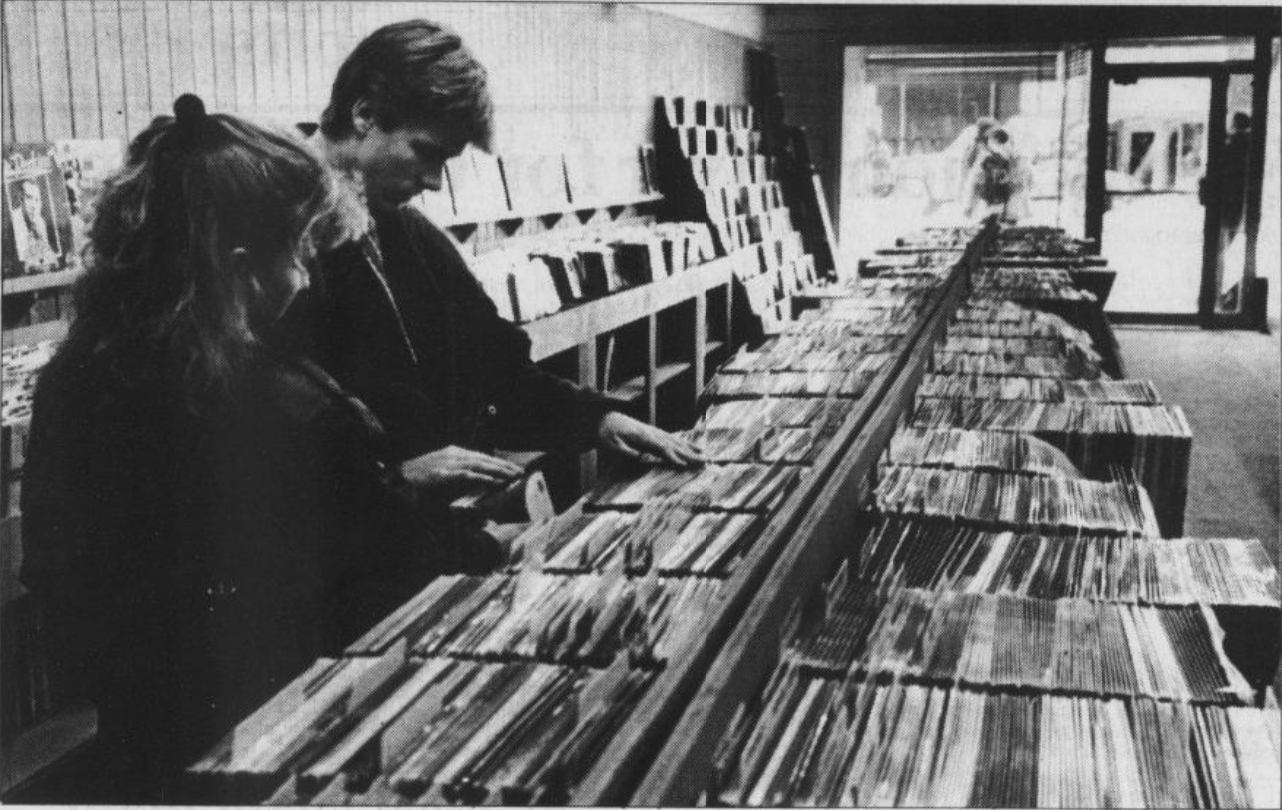
As the 2000s brought a shift toward digital music, record and CD sales declined. Between 2005 and 2008, Schoolkids consolidated its operations, closing the Chapel Hill location in the spring of 2008. The store made a brief return in 2016 after purchasing CD Alley at 405-C West Franklin Street, before closing again in 2024. Today, the space is home to a Bank of America Advanced Center, an automated branch that conceals a rich past beneath its modern surface. From the Royal Cafe to Varley’s to Schoolkids Records, 144 East Franklin Street reflects Chapel Hill’s evolution, a microcosm of the town’s enduring creativity, enterprise, and culture.
Endnotes
“Royal Café Advertisement.” The Tar Heel (Chapel Hill, NC), October 31, 1911.
Open Orange NC. “Foister’s.” Accessed December 2025. https://openorangenc.org/businesses/foisters
.
Bryant, Bernard. Occupants and Structures of Franklin Street. Chapel Hill Historical Society Archives, p. 113.
“Christmas Shopping in Chapel Hill.” The Tar Heel (Chapel Hill, NC), December 9, 1931.
“Carolina Men’s Shop Opens Under Bob Varley.” The Tar Heel (Chapel Hill, NC), April 17, 1938.
Interview with Peggy Varley, by Jeffery Wayne Austin.
“Varley’s Advertisement.” The Tar Heel (Chapel Hill, NC), September 13, 1966.
“Alderman Election Coverage.” The Tar Heel (Chapel Hill, NC), April 28, 1968.
“Fearless Records Opens Downtown.” The Daily Tar Heel (Chapel Hill, NC), February 20, 1987.
“Schoolkids Records Renovates Franklin Street Store.” The Daily Tar Heel (Chapel Hill, NC), October 5, 1994.
“David Harvey Expands Music Businesses.” The Daily Tar Heel (Chapel Hill, NC), June 23, 1994.
“Bank of America Opens Advanced Center on Franklin Street.” The Daily Tar Heel (Chapel Hill, NC), February 20, 2024.
Bank of America. “Advanced Center, 144 East Franklin Street.” Accessed December 2025. https://locators.bankofamerica.com
.